Over the past few years, food delivery apps have become an essential part of the restaurant industry. They have helped restaurants reach more customers, extend their reach beyond physical locations, and offer convenient ordering, payment, and delivery without building an entire technology and logistics operation from scratch.
As orders through these apps have grown, many restaurant owners have started asking a different question:
Should delivery apps be the primary link between a restaurant and its customers, or should the restaurant own a direct channel of its own?
The answer does not necessarily mean abandoning delivery apps. It is more about balancing channels: using delivery platforms for reach and discovery while also building a direct channel where a restaurant can present its brand, prices, and products without making an intermediary platform the main face of the customer relationship.
Delivery Apps Expand Reach—at a Cost
The value delivery apps have brought to restaurants is hard to ignore. They provide fast access to a broad customer base and ready-made infrastructure for ordering, payment, and delivery.
That reach comes at a cost. McKinsey & Company analysis indicates that food-delivery platform commissions globally typically range from 15% to 30% of an order’s value. This can put pressure on margins in an industry that already operates with limited profitability.
In Saudi Arabia, a report published by Mazmz, citing data it attributed to reports from the General Authority for Competition in 2025, said delivery-app commissions range from 10% to 30%, averaging 15%. It also reported that around 40% of restaurants raise prices by 5% to 15% when working with delivery apps to offset commission costs.
This helps explain a familiar experience for diners: the same meal may cost a different amount when ordered directly from a restaurant than when ordered through a delivery app.
That does not necessarily mean the delivery app sets the higher price. Restaurants set their own product prices and may choose different prices across channels to cover the costs associated with each one.
Saudi Diners Are Noticing the Price Difference
These differences are increasingly visible in the local market. In January 2026, a comparison of several meals in Saudi Arabia found notable gaps between prices on delivery apps and prices on some restaurants’ own channels.
For example, one Herfy product was priced at SAR 24 through the restaurant’s channel and SAR 34 on several delivery apps—a difference of about 42%. Other examples showed gaps of around 20% to 25% between direct prices and prices on delivery platforms.
This is where a direct channel matters. Rather than leaving customers to assume that an app price is the restaurant’s standard price, a restaurant can clearly show its direct prices on its own website and digital menu, and make any difference visible to customers.
A Direct Channel Helps Restaurants Know Their Customers Better
There is another equally important factor: data.
Restaurant decisions increasingly depend on understanding customer preferences. Which items are ordered most often? When do customers return? What is the average value of their orders? Which offers or messages encourage them to come back?
When a restaurant has its own website, digital menu, and customer touchpoints, it has a foundation for building a more connected experience over time—one that can include customer relationship management, loyalty, campaigns, targeted offers, and analysis of guest engagement.
A customer can then become more than an order received through a platform; the restaurant can build and develop that relationship over the long term.
Where Yiswa Connect Fits In
Yiswa Connect is designed to help restaurants build a digital presence of their own instead of tying their entire digital identity to external platforms.
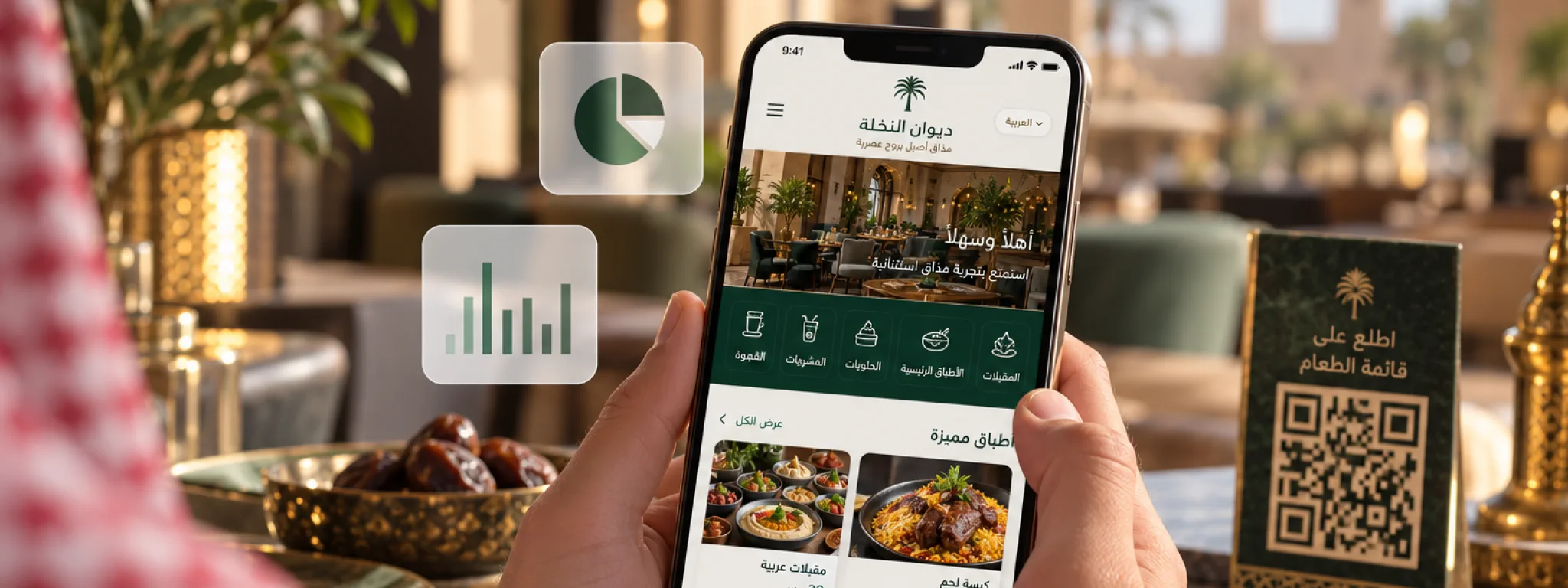
With Yiswa Connect, a restaurant can create a website under its own brand that reflects its identity and presents its story, locations, information, and guest experience independently.
It can also create a restaurant-branded digital menu for its website or QR code, giving the restaurant a direct place to present products and prices in a way that suits its brand.
This makes it easier to show the difference between ordering directly and ordering through delivery platforms.
If some products cost less through a restaurant’s direct channel than on delivery apps—subject to the agreements and policies in place—the restaurant can highlight its direct price rather than leave customers to assume that the app price is the product’s standard price.
More importantly, the website and menu do not have to remain separate assets. They can become part of a digital presence the restaurant can develop and connect with its wider operations and guest experience.
Yiswa Connect’s role goes beyond the direct channel. By managing the menu and integrating with delivery apps, restaurants can manage product prices across connected delivery channels from one place instead of updating each platform separately.
This gives restaurants a more efficient way to manage pricing: direct prices on their website and digital menu, channel-specific prices where needed, and centralized updates through Yiswa Connect.
That is the idea behind Yiswa Connect:
Manage your website, branded digital menu, prices, and different channels from one place.
References
- McKinsey & Company, “Ordering in: The rapid evolution of food delivery,” September 2021. The report discusses delivery economics, restaurant margins, delivery-platform commission ranges, and their effect on pricing.
- Aleqtisadiah, 2022: A review of commissions from five delivery apps in Saudi Arabia, based on merchant contracts; the reported range was 15%–23%, with an average of 18%.
- Argaam, January 2026: A comparison of actual prices across Jahez, HungerStation, Ninja, Keeta, and the direct channels of several Saudi restaurants.
- Aleqtisadiah, 2023: A comparison of 60 meals from ten restaurants across direct channels and delivery apps.
- General Authority for Competition / National Competitiveness Center, 2025: Draft guide on promoting competition in food-delivery platforms.
- Keeta Terms and Conditions: Products on the platform may be priced differently from the merchant’s website, app, or store.