
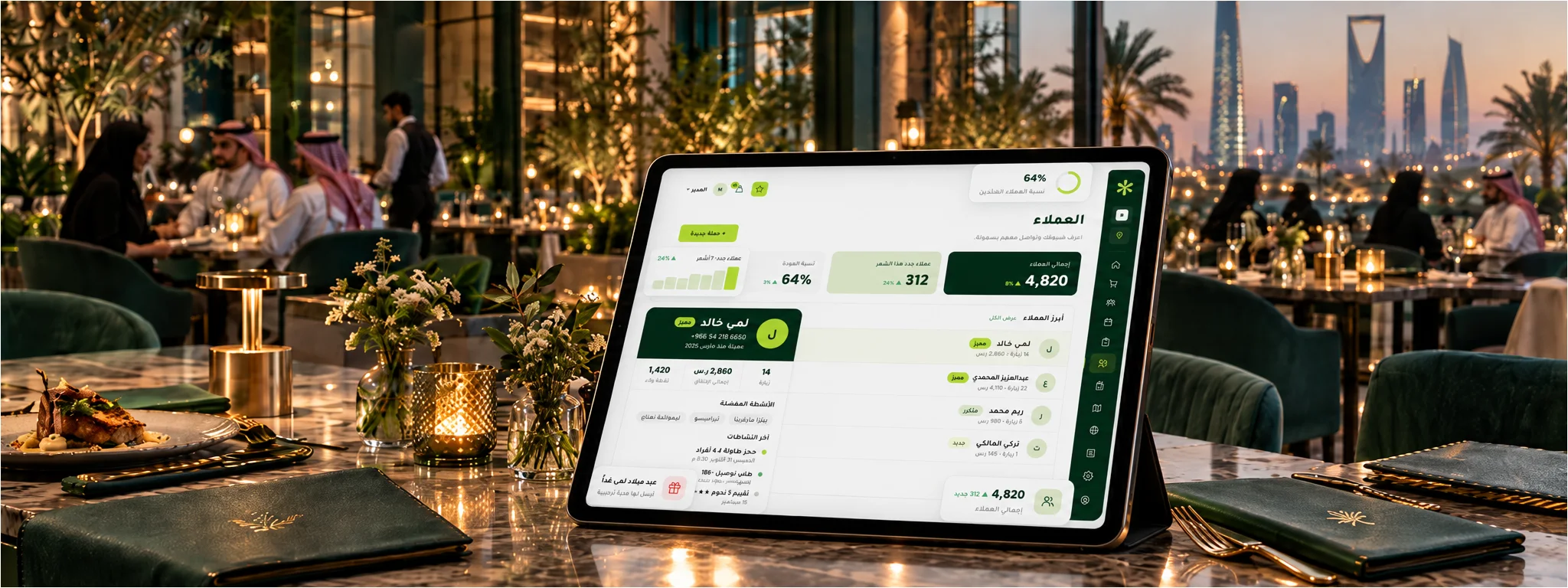
In today’s restaurant market, the challenge is no longer just attracting a guest for the first time. It is understanding them better and giving them a reason to come back.
A guest may visit a restaurant, book a table, join a waitlist, browse the menu, place an order, pay, and leave. At many restaurants, the relationship ends there.
Yet every one of those steps creates data that can help a restaurant understand its guests and make better decisions—if the information is connected and available in one place.
The Market Is Growing—and Competition for Guests Is Intensifying
According to the General Authority for Statistics’ Saudi Cities Livability Report 2025, the number of active restaurant and café licenses in the Kingdom reached 119,902 in 2024, up from 91,618 in 2022.
At the same time, the guest journey has become more digital than ever. The Saudi Central Bank reported that electronic payments accounted for 85% of all retail payments in the Kingdom in 2025, up from 79% in 2024. This figure covers retail as a whole, not restaurants alone, but it reflects how quickly the Saudi market is moving toward digital experiences.
Amid this growth, serving good food is no longer enough on its own. Understanding guests and their experience has become an important part of staying competitive.
The Problem Is Not a Lack of Data—it Is Fragmented Data
Many restaurants already have guest data, but it is spread across different systems.
Reservations live in one system, the waitlist in another, the digital menu on a separate platform, customer details in a different file, and marketing campaigns operate independently of all of them.
What is the result?
A restaurant knows it has customers, but it does not always have a clear picture of each guest’s journey and interactions with the brand.
A guest may have visited five times, yet appear in the system as nothing more than a phone number.
Another guest may not have visited for months, but the restaurant has no easy way to identify them and reach out with a relevant offer.
What Can a Restaurant Learn About Its Guests?
When different touchpoints are connected, a restaurant can build a clearer picture of each guest, including:
- How often they visit.
- Which location they prefer.
- Their previous reservations.
- How they interact with the waitlist.
- Which campaigns they engage with.
- How they found the restaurant.
- Their feedback and ratings.
- The last time they interacted with the restaurant.
The value is not in collecting as much data as possible. It is in turning the right data into decisions a team can act on.
From Data to a More Personal Experience
Imagine a restaurant knows that one of its guests regularly visits a particular location on weekends.
Instead of sending the same marketing message to thousands of people, the team could reach out with a message or offer that fits that guest’s behavior.
Or it could identify a group of guests who have not visited in a while and create a targeted campaign to reconnect with them.
It could also recognize its most frequent guests and give them a different experience or benefit.
That is when guest data starts to become more than a set of numbers: it becomes a tool for building lasting relationships.
Deloitte research on restaurant loyalty programs points out that successful loyalty is not only about discounts and points. Personalization, priority service, and exclusive benefits can also help build a stronger relationship with guests.
Loyalty Does Not Start with a Points Program
When people talk about customer loyalty, the first things that often come to mind are points, discounts, or free meals.
But loyalty starts much earlier: when a restaurant remembers a guest; when booking becomes easier; when wait times are shorter; when a guest receives a message that reflects their interests instead of a random promotion; and when the experience feels connected every time they interact with the restaurant.
A loyalty program can be part of that system, but it is not the whole system.
One System Gives Restaurants a Clearer Picture
That is why it matters to connect the guest experience with restaurant operations and marketing.
With Yiswa Connect, restaurants can manage several guest touchpoints in one place—from their website and digital menu to reservations, waitlists, customer relationship management, campaigns, reporting, and integrations.
The goal is not to add yet another system to a restaurant’s collection of tools.
The goal is to connect systems and interactions so that guest data becomes clearer and more useful to the restaurant.
- Who its guests are.
- How to engage with them.
- When they come back.
- What it can do to improve their next visit.
When the guest journey is connected, a restaurant can better understand: