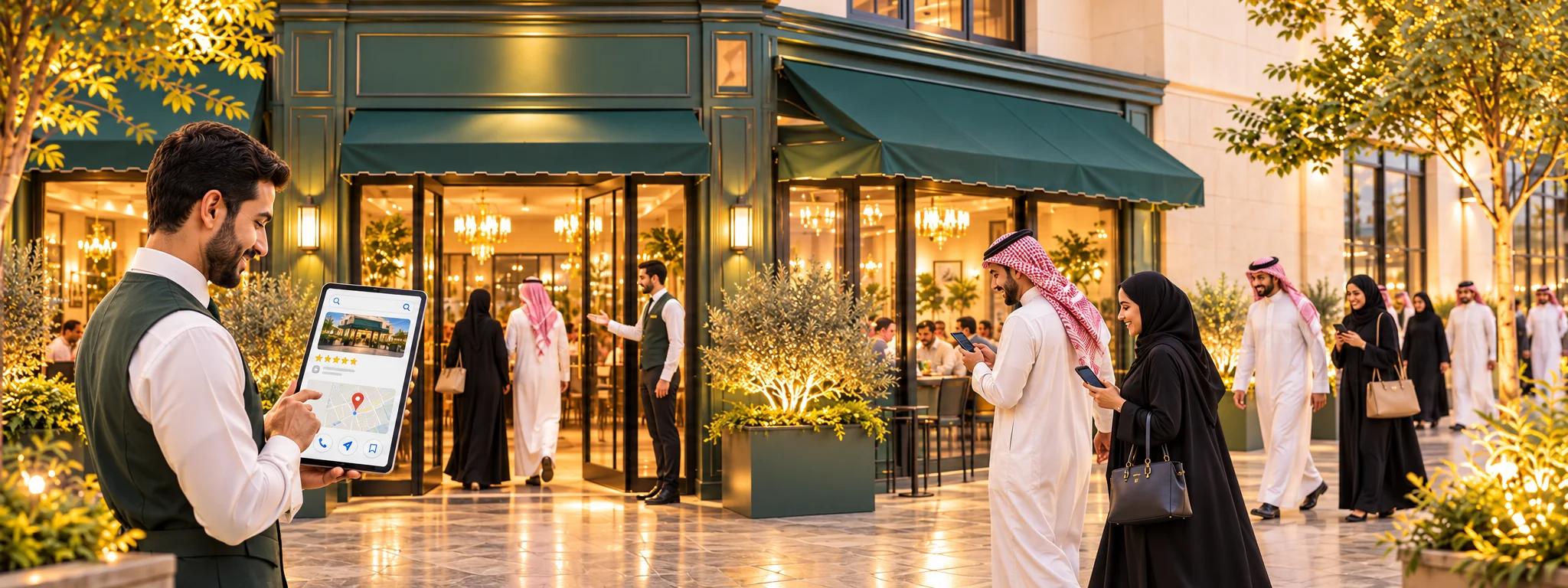
Your restaurant may be one of the best in the city—but can customers find it easily?
Imagine someone searching Google for “best burger restaurant in Riyadh” or “breakfast cafés in Al Yasmin.” Within seconds, they see several options and often compare locations, menus, reviews, and photos before deciding where to go.
Does your restaurant appear among those options? Being on Google is no longer just a matter of adding a name and address. It is an essential part of marketing and customer discovery, especially when people search before visiting restaurants and cafés.
Search engine optimization (SEO) can make your restaurant website easier to discover and improve its chances of appearing for relevant searches. It starts with understanding what your audience is looking for and improving your local presence, website, and content.
1. Use the Search Terms Your Customers Use
Keywords are the phrases customers type into Google when they look for a restaurant, a particular dish, or a nearby place. If you run an Italian restaurant in Riyadh, customers might search for “Italian restaurant in Riyadh,” “best pasta in Riyadh,” “Italian restaurants in Al Nakheel,” or “restaurants near me.” Each phrase is an opportunity to reach a potential guest.
Start by identifying searches related to your restaurant type, location, and signature dishes. Then use them naturally in your digital content. Instead of using only your restaurant’s name as the homepage title, add a clear description such as “ [Restaurant Name] | Italian Dining in North Riyadh.”
Do not limit keywords to the homepage. Use relevant phrases in menu descriptions, branch pages, article titles, and dish descriptions. If your restaurant is known for a specific dish, such as truffle pasta, dedicated content about it may help you reach people searching for that dish.
Do not repeat keywords just to increase their frequency. Customers are looking for useful information, so write naturally about the experience your restaurant actually offers, and make sure each page answers a clear need.
2. Measure Your Restaurant’s Google Performance
Appearing in search results is an important step, but it helps to understand what happens next. Are people clicking through to your website? Are they looking up a branch location? Are visits from Google increasing or declining over time?
Google Search Console helps you understand how your website appears in search through metrics such as impressions, clicks, click-through rate, and average position. If your menu page gets many impressions but few clicks, review its title and description and check that the content matches what customers are searching for. Search Console can also show which queries bring visitors and reveal opportunities for new content.
Your Google Business Profile helps customers find your restaurant in Google Search and Maps. Review metrics such as profile views, search terms, clicks to your website, direction requests, and calls.
Google says local results are primarily based on relevance, distance, and prominence. Keep your opening hours, category, location, photos, and menu links up to date, and pay attention to customer reviews and responses. Do not add inaccurate information or keywords to your business name; make sure your listing reflects the real restaurant.
Do not overlook website speed and mobile usability. If the site takes too long to load or it is difficult to find the menu or make a reservation, a potential guest may leave before engaging. Use Google PageSpeed Insights to review performance and identify technical issues.
3. Build Trust and Earn Relevant Links
You may come across Domain Rating in SEO tools such as Ahrefs. It is a third-party metric that estimates the strength of external links pointing to a website compared with other sites, on a scale from 0 to 100. If a food publication writes about breakfast spots in Riyadh and links to your restaurant, customers may discover you through another source and your website gains a relevant link.
You can build a natural backlink profile by collaborating with reputable food and restaurant publications, earning genuine media coverage, publishing useful content worth sharing—such as stories behind your dishes and dining experiences—and using the correct website link in your business listings and digital pages.
It is important to understand that Domain Rating is not a direct Google ranking factor, and a higher score does not guarantee a top search position. It is a way to compare backlink profiles. Search visibility depends on several factors, including helpful content, relevance to customer searches, website experience, and local presence.
4. Bring the Essentials Together in a Consistent Strategy
Improving your restaurant’s visibility does not depend on a single action. Start with a clear website that includes branch information and menus, identify the phrases your customers search for, and keep your Google Business Profile up to date.
Then review performance regularly and improve your pages and content based on the data. Do not focus only on increasing website visits; work toward turning visits into reservations, orders, and in-person visits to your branches.
To reach customers in Riyadh and other Saudi cities, keep each branch’s details accurate and consistent, and provide clear information about its location, menu, and hours. Restaurants serving visitors from across the GCC or an international audience can also provide useful information in the languages those audiences use, while keeping local details accurate.
How Yiswa Connect Can Help Improve Your Restaurant’s Visibility
The more organized and up to date your digital presence is, the easier it is for customers to discover your restaurant and learn what it offers. Yiswa Connect brings together digital tools that help restaurants build this foundation and manage guest touchpoints in one platform.
- A branded website that presents your restaurant, locations, and information, with the option to connect a custom domain.
- An editable digital menu that helps customers find accurate dish and menu information.
- A blog for publishing useful articles about your restaurant, dishes, and guest experiences.
- Tools to manage your Google presence and keep business information current.
- A connected guest experience that makes it easier to move from discovering your restaurant to browsing the menu and booking.
These tools can help you apply the fundamentals of digital visibility and create a more connected experience. Continue monitoring SEO performance and technical site health as you grow.
A restaurant’s success depends not only on the food and service, but also on whether customers can find it when they search. Build a stronger digital presence with Yiswa Connect and make your restaurant easier to discover and engage with from one place.