
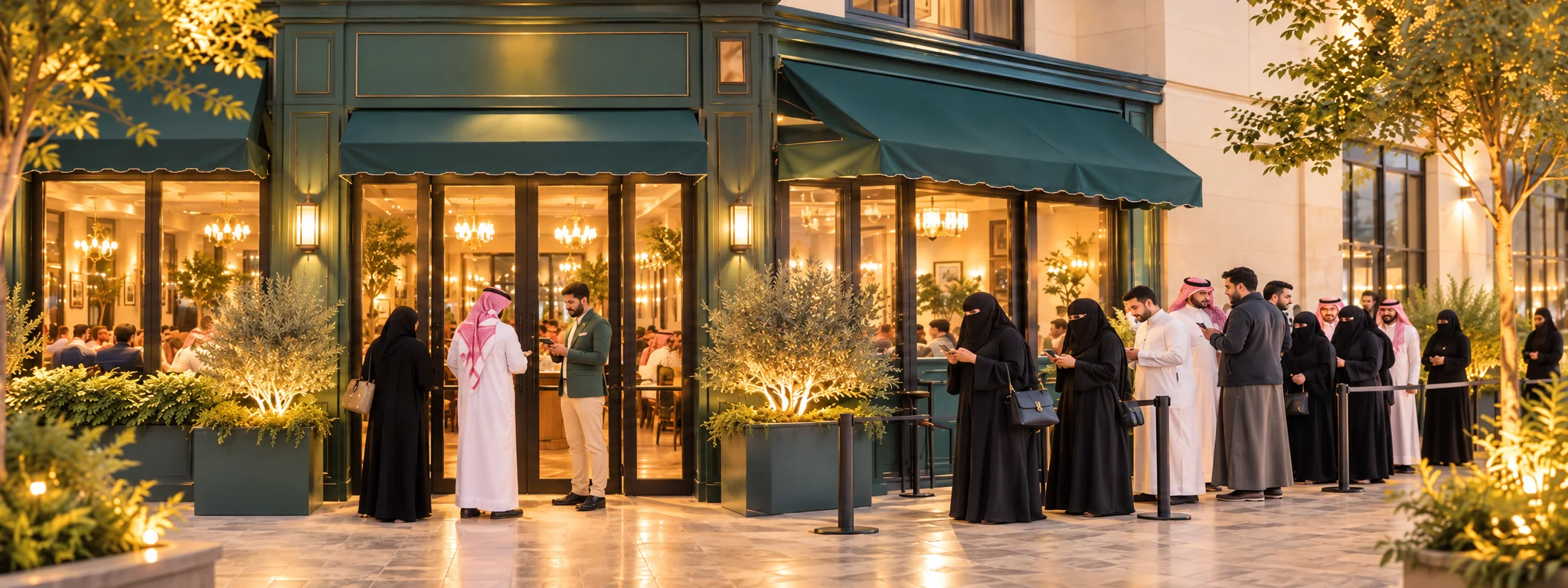
A busy restaurant is a sign of success—but how you manage the rush makes all the difference.
Picture a weekend evening: every table is occupied, guests keep arriving, and the host team is organizing the queue while answering the same question: “How much longer for our table?”
It may look like proof of strong demand, but without a clear way to manage the waitlist and reservations, the rush can become stressful for both staff and guests.
As competition grows among restaurants and cafés in Saudi Arabia, great food alone is no longer enough to bring guests back. Their experience starts as soon as they arrive, and the wait—and how it is handled—can influence whether they return.
How can you make the most of busy periods without losing guests to the wait?
1. Prepare Before the Rush Begins
Managing peak periods does not start when the first guest arrives. It starts with planning ahead and clearly assigning responsibilities across the team.
Assign someone to welcome guests, organize the queue, and estimate wait times. A clear owner helps reduce mistakes and improve communication.
Coordinate reservations with walk-ins so the same table is not promised to more than one party. Review the busiest times during the week—especially weekends and special occasions—and schedule staff according to expected demand.
Have a plan for longer waits, whether that means sharing realistic estimates or welcoming guests in a more flexible way. Do not wait for the list to pile up: monitoring demand as it changes helps the team act before a busy period becomes a problem.
2. Organize Tables to Improve Operations
Your restaurant may be full, but are all tables being used as effectively as possible? Sometimes the issue is not the number of tables, but how they are allocated and how much time passes between one party leaving and the next being seated.
- Balance reservations with walk-ins, keeping enough flexibility for your restaurant’s demand patterns.
- Understand the average visit length. A table for two turns differently from a large group, and a quick-service restaurant differs from a full-service dining experience.
- Keep table status current: occupied, available, or needing preparation.
- Coordinate service and host teams to reduce the time between a guest leaving and the next table being ready, without compromising the experience.
For example, if a table for two is typically occupied for 90 minutes but you leave a two-hour gap between reservations, there may be an opportunity to improve scheduling and make better use of capacity. The goal is not to rush guests; it is to reduce the time lost between visits.
3. Replace Traditional Lists with a Digital Waitlist
Paper lists or handwritten names may work during quiet periods, but the chance of mistakes increases as demand grows. Digital waitlist systems help restaurants and cafés organize arrivals and reduce congestion at the entrance.
- Keep the queue organized and easy to follow.
- Estimate wait times more accurately using the number of waiting guests and available tables.
- Reduce pressure on the host team instead of relying on paper lists or memory.
- Reassure guests that their place is saved and the wait is being managed clearly.
- Use visit data to understand demand patterns and plan more effectively.
A digital waitlist does more than sort names. It gives you a clearer view of guest flow and peak periods, helping you improve operational planning.
4. Do Not Let the Wait Be Your Last Interaction with a Guest
Not every guest who arrives will get a table, but every interaction can create an opportunity for a future visit. When someone leaves because the wait is too long, you may lose more than that day’s order—you may lose the chance to build a lasting relationship.
That is where connecting the arrival experience with customer relationship management (CRM) matters. When guest data is organized and used with their consent, you can:
- Recognize returning guests and understand their visit and interaction history.
- Reconnect with guests who have agreed to receive marketing messages through appropriate channels.
- Encourage repeat visits with offers or invitations that suit guests’ interests and previous engagement.
- Build relationships beyond a single visit and create experiences closer to each guest’s preferences.
The real opportunity is not only to welcome more guests today, but to give them a reason to return tomorrow.
5. Use Data to Improve the Next Peak Period
After a busy day, do not stop at asking, “How was the rush?” Ask, “What did we learn from it?” Regularly reviewing operational performance helps uncover opportunities before the same problems happen again.
Track these indicators to turn the rush into useful insight:
- Average time guests wait before being seated.
- Peak periods with the highest guest volume.
- The rate at which guests leave or cancel while on the waitlist.
- The share of waiting guests who are successfully seated.
- Average table occupancy time by party size or visit period.
You do not need complex analysis to get started. A simple weekly review can reveal the causes of delays and help improve staff and table allocation. Set aside a short time to review results with the team; sharing numbers and observations helps everyone prepare for the days ahead.
6. Make Waitlist Management Part of the Guest Experience
The guest experience does not begin when food is served or end when the bill is paid. Every touchpoint shapes their impression—from discovering your restaurant online, to making a reservation or joining the waitlist, to the visit and follow-up afterward.
That is why restaurant management tools should not operate in isolation. When reservations, waitlists, guest data, and operations are connected, it becomes easier to deliver a consistent experience and reduce errors caused by using separate systems.
Instead of treating every visit as a standalone experience, you can use the information available to improve the next one and build a long-term relationship with your guests.
How Yiswa Connect Helps You Manage Busy Periods
A full restaurant can signal strong demand, but turning that demand into sustained growth takes more than occupied tables. Yiswa Connect brings guest experience, operations, and marketing together in one platform to help restaurants and cafés stay organized and improve customer experiences.
With waitlist and reservation tools, you can organize arrivals, manage demand more efficiently, and reduce reliance on traditional methods that can lead to delays and mistakes.
With customer relationship management (CRM), you can use guest data to build stronger relationships and send tailored campaigns in line with their consent. Reports and analytics also help you understand performance and make data-informed decisions instead of relying on guesswork.
With Yiswa Connect, a busy period does not have to become chaos. Make every visit an opportunity for a better experience, a longer relationship, and sustained restaurant growth.
Discover how Yiswa Connect can help you manage your restaurant or café more intelligently.